Introduction
Indian ethnic fashion beautifully combines traditional craftsmanship with modern design. Among the many popular festive outfits, the red and cream mirror work lehenga stands out for its vibrant colours, graceful flare and decorative blouse.
At Radha Fashions, we create ready-to-wear ethnic outfits while also sharing knowledge about dress designing and garment making. Our Red and Cream Ready-to-Wear Designer Crepe Lehenga – RW50 showcases how fabric selection, colour coordination and mirror embellishments can come together in a stylish ensemble.
Whether you are searching for a designer lehenga for a special occasion or interested in learning garment construction, this guide explains the key design elements, styling ideas and basic lehenga-making techniques.
1. Explore the Red and Cream Designer Lehenga Design
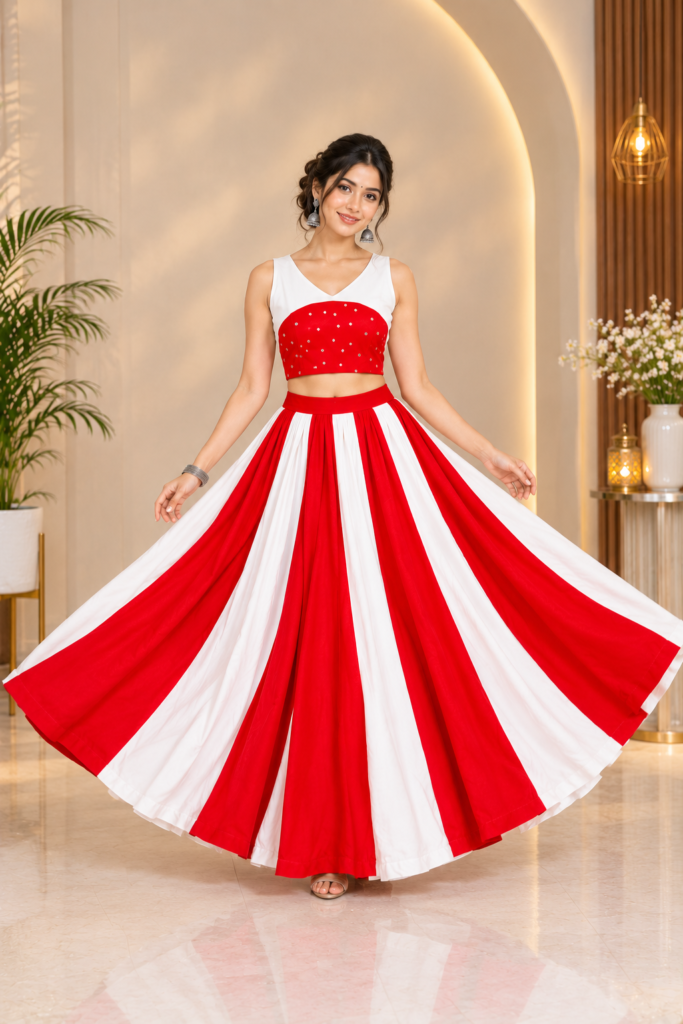
The RW50 lehenga features a striking combination of bright red and cream shades. Its alternating vertical panels create an attractive pattern, while the broad flare adds graceful movement to the skirt.
In addition, the matching sleeveless blouse features a V-shaped front neckline and a rounded U-shaped back neckline. Silver-toned mirror embellishments decorate the red front panel, creating a festive appearance.
The main design highlights include:
- Colour: Bright red and cream/off-white.
- Fabric: Soft cotton crepe.
- Lehenga style: Full-flare panelled skirt.
- Blouse design: Sleeveless blouse with silver-toned mirror work.
- Front neckline: V-neck.
- Back neckline: Rounded U-neck.
- Fabric used: Approximately 10 metres for the complete outfit, according to the product listing.
As a result, the outfit combines traditional Indian ethnic details with a contemporary silhouette. The contrasting panels also make this design an interesting reference for people learning fashion designing.
2. Why Fabric Selection Matters in Lehenga Making
Fabric selection plays an important role in creating a beautiful and well-finished garment. The material affects the outfit’s drape, movement, appearance and stitching requirements.
For the RW50 design, soft cotton crepe provides the fabric base for the flowing lehenga silhouette. However, the exact fall and comfort depend on the fabric’s composition, weight and construction.
When selecting fabric for a designer lehenga, consider the following factors:
- Drape: Choose a fabric that supports the desired skirt shape and movement.
- Weight: Consider how the material will hang and how much volume it will create.
- Stitching: Adjust needle size, thread and stitch settings according to the fabric.
- Lining: Add a suitable lining when needed for coverage, comfort or structure.
- Finishing: Neat seams and an even hem contribute to the overall appearance.
Before cutting the fabric, check its shrinkage and colour stability. Furthermore, testing a small sample can help you understand how the material behaves during stitching.
3. The Beauty of Mirror Work in Indian Ethnic Wear
Mirror work is a decorative technique widely associated with Indian ethnic clothing. These reflective embellishments add texture and visual interest to blouses, kurtis, lehengas and other traditional garments.
In the RW50 design, silver-toned round mirrors contrast with the red blouse panel. Consequently, the embellishment creates a focal point while allowing the red and cream colour combination to remain prominent.
If you are learning how to make a mirror-work blouse, follow these basic guidelines:
- Plan the embellishment pattern before starting the work.
- Maintain consistent spacing for a balanced appearance.
- Select an attachment method suitable for the fabric and embellishments.
- Secure the decorative elements carefully to improve durability.
- Finally, inspect the reverse side to check the finishing and comfort.
Moreover, beginners can practise the placement on a small fabric sample before working on the final blouse. This approach helps develop accuracy and confidence.
4. How to Make a Panelled Lehenga: Basic Steps
A panelled lehenga is created by joining several fabric sections to form a skirt. The number and width of the panels influence the overall pattern, flare and silhouette.
For a red and cream alternating-panel lehenga, the general construction process involves the following steps.
Step 1: Take body measurements.
First, record the waist measurement and desired lehenga length. Depending on the pattern, additional measurements may be required for calculating the panels and waistband.
Step 2: Prepare the pattern.
Next, calculate the panel dimensions according to the required waist fit, skirt length and desired flare. Include suitable seam allowances before cutting.
Step 3: Plan the colour arrangement.
Arrange the red and cream panels in the intended sequence. This step helps maintain a consistent pattern throughout the skirt.
Step 4: Cut the fabric.
Once the pattern is ready, cut each section carefully. In particular, check the panel lengths and fabric direction before proceeding.
Step 5: Join the panels.
Stitch the fabric sections together while maintaining consistent seams. As a result, the alternating colours form a balanced design.
Step 6: Attach the waistband.
Prepare and attach the waistband according to the selected fitting and closure method. Ensure that the waist area is secure and comfortable.
Step 7: Finish the hem.
After assembling the skirt, check its length and finish the bottom edge evenly. A level hem improves the overall appearance of a flared lehenga.
Step 8: Complete the final inspection.
Finally, examine the seams, waist fit, panel alignment and overall flare. Make any necessary adjustments before considering the garment complete.
These steps provide a general introduction to lehenga making. Actual pattern calculations will vary according to body measurements, fabric width and the desired design.
5. Designing a Matching Sleeveless Mirror Work Blouse
The blouse is an essential element of a lehenga set because its neckline, fit and decorative details contribute to the complete look.
The RW50 blouse combines a cream sleeveless upper section with a contrasting red front panel decorated with silver-toned mirror work. Additionally, its V-neck front and rounded U-neck back create a contemporary ethnic style.
When preparing a similar blouse pattern, pay attention to these details:
- Shoulder width and bust measurement.
- Armhole depth and sleeveless finishing.
- Front neckline shape and depth.
- Back neckline shape and depth.
- Blouse length and waist placement.
- Mirror-work positioning and secure attachment.
- Lining, fastening and seam finishing.
For a better fit, prepare the pattern using accurate measurements and conduct a fitting trial where possible. Meanwhile, check that the armholes and neckline allow comfortable movement without pulling or gaping.
6. Styling Tips for a Red and Cream Lehenga
The red and cream colour combination works well for festive styling because it balances a vibrant shade with a softer neutral tone. With the right accessories, the same outfit can be styled for different occasions.
For festive celebrations: Pair the lehenga with traditional earrings, bangles and complementary footwear. These accessories enhance the ethnic appearance without distracting from the outfit.
For wedding functions: Consider statement jewellery and a coordinating dupatta. However, keep the overall styling balanced so that the mirror-work blouse remains visible.
For family gatherings: Choose simpler accessories for an elegant, understated look. This approach allows the panelled skirt and colour combination to stand out.
For fashion photography: Use a clean background and suitable lighting to highlight the red and cream panels. In addition, close-up photographs of the mirror work can help showcase the blouse details.
Ultimately, the best styling choices depend on the occasion, personal preference and the overall appearance you want to achieve.
7. Ready-to-Wear Lehenga vs Custom-Made Lehenga
Both ready-to-wear and custom-made lehengas have their own advantages. Therefore, the right choice depends on the buyer’s requirements, preferred design and fitting needs.
| Feature | Ready-to-wear lehenga | Custom-made lehenga |
|---|---|---|
| Availability | Available in listed sizes | Made according to agreed measurements and design |
| Design | Follows the existing product design | Offers greater scope for personalisation |
| Production | Prepared before purchase | Requires pattern development and stitching time |
| Fitting | Depends on the selected size and garment measurements | Can be developed around individual measurements |
| Suitable for | Buyers who prefer a prepared outfit | Buyers seeking a personalised design |
For example, someone looking for a finished festive outfit may prefer a ready-to-wear lehenga. On the other hand, a customer who wants specific design changes may prefer a custom-made garment.
At Radha Fashions, our ready-to-wear collection brings together design knowledge and garment-making experience in finished ethnic outfits.
8. Learn Lehenga Making and Dress Designing
Dress designing is a practical skill that combines creativity, measurement, pattern drafting, fabric knowledge, stitching and finishing. Learning these fundamentals can help beginners understand how a garment develops from an idea into a finished outfit.
If you want to learn how to make a lehenga or designer dress, follow a structured learning process:
- Learn body measurements: Understand how to take and record accurate measurements.
- Study fabric types: Explore fabric weight, grain direction, drape and handling.
- Practise basic stitching: Develop skills in straight stitching, seams and finishing.
- Understand pattern drafting: Learn how to prepare patterns for skirts, waistbands and panels.
- Explore lehenga construction: Practise panel joining, flare calculations and hem finishing.
- Learn blouse making: Study neckline drafting, armholes, fitting and blouse construction.
- Practise embellishment techniques: Explore mirror work and other decorative details.
- Complete a sample garment: Apply your skills to a simple project before attempting more complex designs.
Furthermore, practising on sample fabric can help you identify mistakes before working with the final material. Gradually, you can progress from basic skirts to more detailed ethnic outfits.
At Radha Fashions, we value both finished ethnic fashion and the knowledge behind garment construction. Through dress-making education, fashion enthusiasts can explore the techniques used to create different styles of ladies’ dresses, designer outfits, kurtis, co-ord sets and lehengas.
9. Product Details: Red and Cream Ready-to-Wear Designer Lehenga RW50
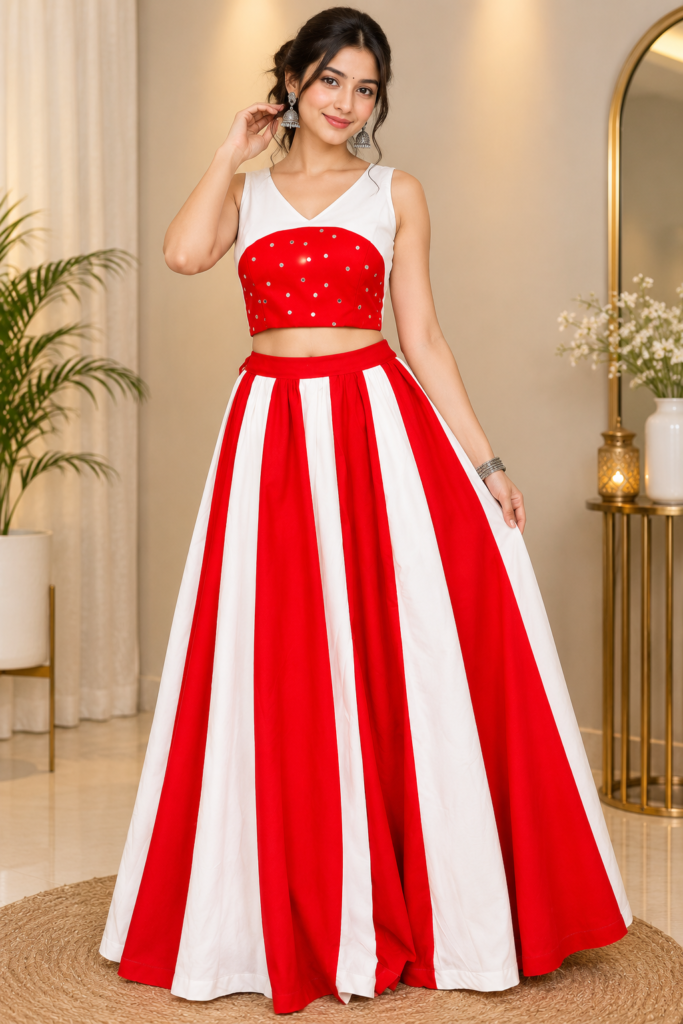
Product name: Red and Cream Designer Crepe Lehenga with Mirror Work Sleeveless Blouse – RW50
Product code: RW50
Fabric: Soft cotton crepe
Colour: Red and cream/off-white
Design: Full-flare panelled lehenga with sleeveless mirror-work blouse
Occasions: Festive wear, wedding functions, parties and cultural celebrations
Fabric used: Approximately 10 metres
The product listing includes sizes S, M, L, XL, XXL and XXXL. For the L size, the listed measurements are shoulder 15 inches, bust 38 inches, waist 34 inches, blouse length 14 inches and lehenga length 50 inches. Buyers should review the size information and garment measurements before selecting a size.
View the full product details here:
Red and Cream Ready-to-Wear Designer Lehenga – RW50
Conclusion
The red and cream designer mirror-work lehenga demonstrates how colour coordination, soft crepe fabric, panelled construction and decorative blouse detailing can create a distinctive ethnic outfit.
Understanding these elements is useful not only for people shopping for ready-to-wear lehengas but also for aspiring designers, tailors and fashion enthusiasts who want to learn about garment construction.
At Radha Fashions, we bring together ready-to-wear ethnic fashion and an interest in dress-making education. From understanding fabrics to exploring blouse patterns and lehenga construction, learning about the design process can help readers appreciate the creativity and skill behind every outfit.